

Subaru Alters EV Plans Amidst Shifting Market Demands
Subaru is the latest car manufacturer to adjust its electric vehicle (EV) strategy in response to changing consumer preferences and market conditions. The company had initially committed to investing nearly $10 billion in electrification efforts by 2030, but is now reevaluating its plans.
Key Points:
- Subaru had planned to launch four electric SUVs co-developed with Toyota by 2026, which remains on track.
- The company had also planned to develop four additional EVs in-house by 2028, but this timeline may be delayed.
- The shift in strategy is attributed to increasing demand for hybrids and a reappraisal of internal combustion engines.
- Subaru expects to take a $1.36 billion hit from tariffs imposed by the Trump administration.
Adjusting the EV Roadmap
Subaru’s president, Atsushi Osaki, cited “increasing demand for hybrids and the reappraisal of internal combustion engines” as the reason for delaying “the timing of full-scale EV mass production investment.” The company has already invested $1.94 billion of its initial $9.74 billion commitment and will review the remaining $7.8 billion.
Hybridization Trend
The trend towards hybridization has been gaining momentum over the past 18 months, with other manufacturers like Hyundai increasing their investments in this space. Subaru’s decision to adjust its EV plans is also influenced by economic headwinds, including the loss of the federal EV tax credit in the United States and steep automotive tariffs.
Cost-Cutting Measures
To mitigate the impact of tariffs, Subaru plans to trim costs by $1.29 billion by 2030. The company expects a net profit of $1.03 billion for the financial year ending March 2026, a 53% decline from the previous year.
New EV Models
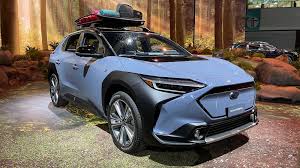
Subaru’s latest EV model, the Uncharted, is a reworked and rebranded version of Toyota’s latest electric C-HR. The company is staying true to its outdoorsy image while reevaluating its EV strategy.
Source:
Nikkei Asia