


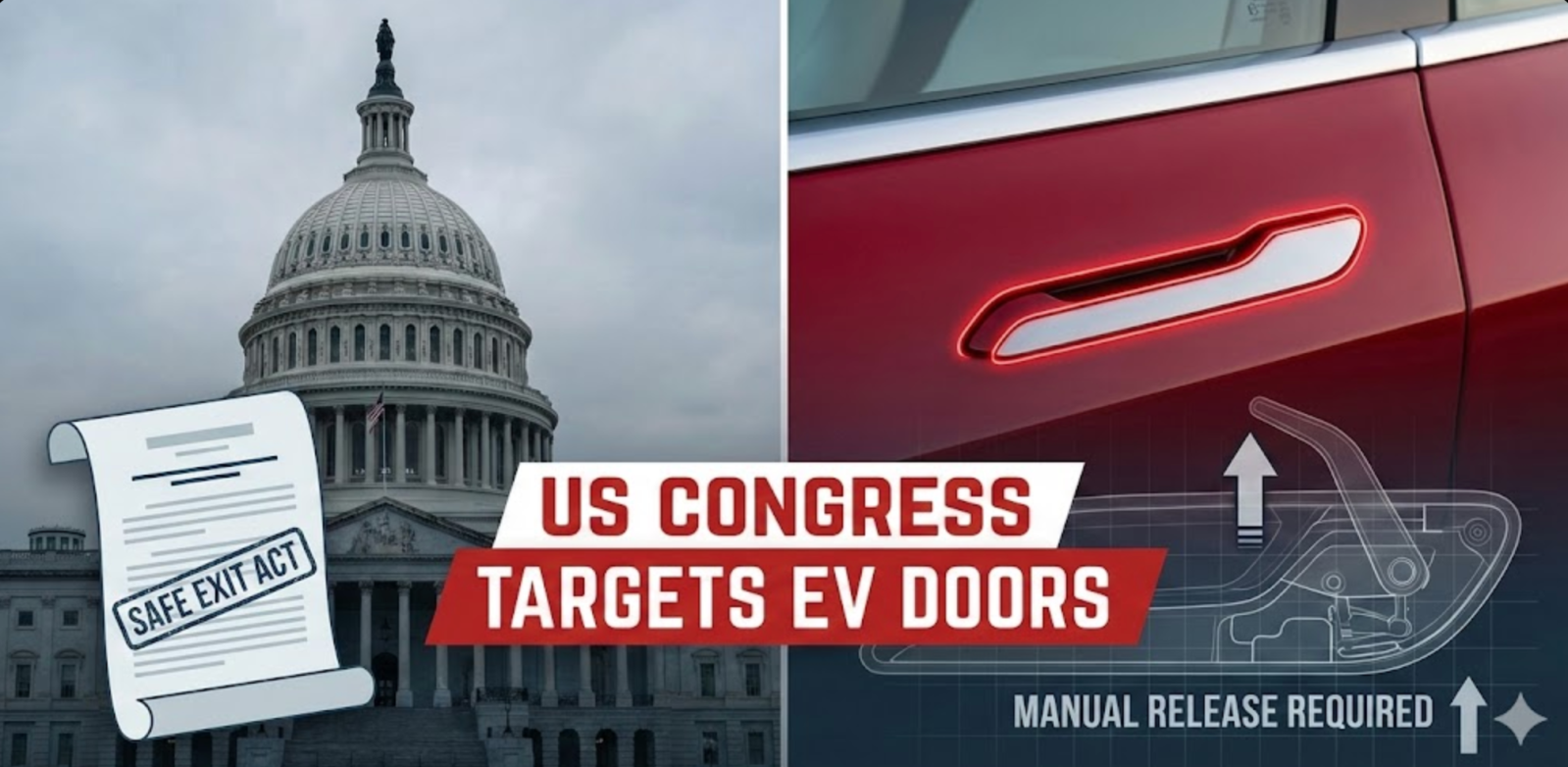
A proposed U.S. House bill takes direct aim at Tesla—and CEO Elon Musk—over concerns that electric vehicle (EV) door designs could trap occupants during emergencies. The SAFE Exit Act, introduced by Rep. Robin Kelly (D-IL), would mandate clearer manual door releases in EVs to prevent fatalities linked to power failures.
Key Details of the Bill
- Safety Focus: The legislation targets electronic door latches (common in Teslas), which rely on sensors or buttons instead of mechanical handles. These systems risk trapping passengers if a crash disables power.
- New Rules: The bill requires the NHTSA to set standards for “easy-to-find” manual releases and external access points for first responders.
- Sharp Criticism: Rep. Kelly specifically called out Tesla and Musk, stating, “Profits and style should not come before lives… Tesla designs are not safe, nor efficient, and it has cost people their lives.” The bill cites 15 deaths tied to Tesla doors failing to open post-crash.
The Broader Issue
While most EVs with electronic latches include manual overrides, Tesla’s rear-door releases in Models 3 and Y are often criticized as unintuitive, buried behind window controls. Critics argue few passengers—or even owners—know how to operate them in crises.
Global Context
The U.S. push follows China’s recent regulations for manual EV door releases, which Tesla is reportedly already addressing.
Perspective
Tesla supporters may bristle at the bill’s pointed language, but safety advocates and Consumer Reports back the measure. As Electrek notes: “Any death from someone trapped in a car is one too many.” While Tesla’s front-door releases are relatively straightforward, the rear-door design highlights a critical flaw that regulation could resolve.